


Terra Mystica
3.8144.00 Reviews
App Specs
- Version
- 110
- Updated On
- License
- $9.99
- Downloads
- 10,000+
- Developer
- DIGIDICED
- Categories
- Board
- Platform
- Android
Screenshots
 Analysis by AppCompare
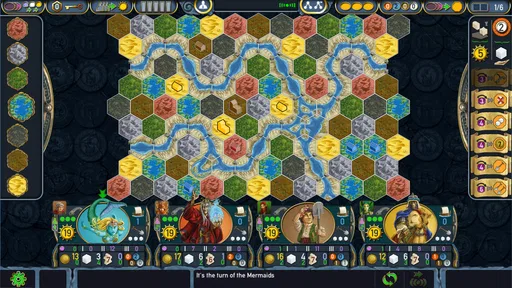
I approached Terra Mystica expecting a digital version of a demanding tabletop strategy game, and that is exactly where its appeal lies. This is not a quick board-style diversion built around instant rewards. It asks me to study the map, understand the relationship between factions and terrain, and make decisions whose value may only become clear several turns later. When I am in the mood to think carefully, that depth is satisfying. When I want something I can finish casually between other tasks, it can feel heavy.
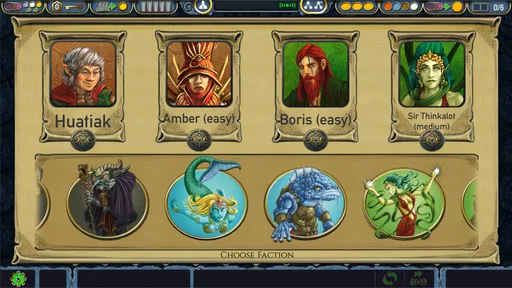
Developed by DIGIDICED, this board game supports up to five players and is aimed at people who enjoy planning more than luck. The mobile format makes the experience easier to access than setting up a physical table, but it does not simplify the underlying character of the game. I still need patience, attention, and a willingness to learn from mistakes. That makes it a specialized recommendation rather than a universal one.
Learning the map before chasing a victory
The first important lesson is that early goals matter more than early points. My opening turns are mostly about creating a position that can support later decisions: choosing where to develop, watching the available terrain, and avoiding moves that look productive but leave me boxed in. The game rewards players who think about future access instead of treating every turn as an isolated scoring opportunity.
That creates a useful tension from the beginning. I want to expand, but expansion has to fit the faction I am using and the shape of the board. A tempting location can be wrong if it forces an awkward route later. Likewise, spending resources immediately may produce a visible benefit while weakening the next phase of my plan. I found that the best early turns often feel modest on the surface because they prepare several stronger options at once.
This is also where newcomers are most likely to misread the game. A beginner may look for one obvious “best” move, while experienced play depends on comparing several imperfect choices. The interface can show the available actions, but it cannot decide which one will preserve the most flexibility. That responsibility remains with me, and it is a major part of the challenge.
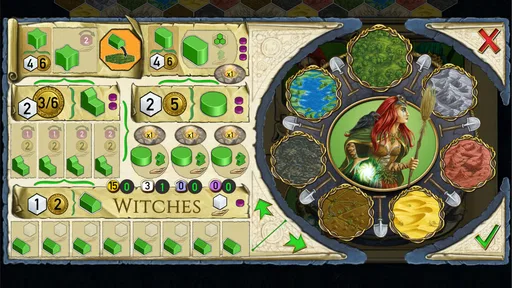
I recommend starting with a deliberate learning session rather than trying to play quickly. Read the faction information carefully, inspect the board before committing, and treat the first game as a lesson in priorities. Trying to imitate an experienced player’s pace too soon is frustrating because the important decisions are not always the most visually dramatic ones.
Why the opening can feel slower than expected
The early game does not constantly shower me with rewards. Progress is often indirect: a placement improves my future options, a carefully chosen upgrade changes what I can afford, or a connection on the map makes a later move possible. Players who prefer immediate unlocks or frequent audiovisual feedback may find this restrained rhythm disappointing.
Worth Reading Before You Choose

EA SPORTS FC Mobile 26 Is a Bigger Football Game, but It Takes Time

Flipboard Shows What News Apps Must Do Beyond the Feed

Switching to Android Auto Means Rethinking Your Driving Routine

Google Calendar Makes a Crowded Week Easier to Manage

Ludo King Makes the Most of the Minutes Between Plans

Baby Panda World Brings Quick Play to Modern Phones, but Its Game Library Feels Busy
For me, the slower opening works because it gives every later improvement context. I remember why a particular position matters, since I usually created it several turns earlier. The downside is that a poor opening can remain visible for a long time. There is no guarantee that a clever recovery will erase the consequences of an early mistake.
A practical habit helps here: before confirming a move, I ask what it gives me now, what it enables next, and which opportunity it closes. That simple three-part check is more useful than chasing the largest immediate gain. It also makes the game easier to explain to a friend because it turns an intimidating decision into a clear comparison.
Reading progress through choices rather than spectacle
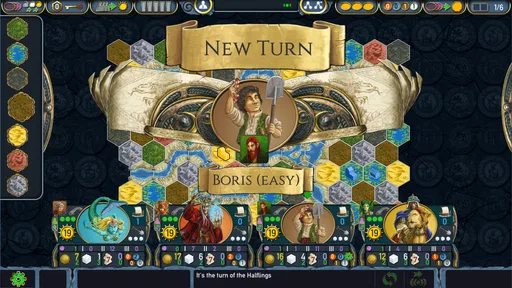
One of the strongest aspects of the design is that progress is communicated through the changing state of the board and my growing set of possibilities. I can tell that a plan is working when my territory becomes more useful, my economy supports more ambitious actions, and I have several reasonable moves instead of only one desperate option. These signals are quieter than a conventional level-up system, but they are meaningful.
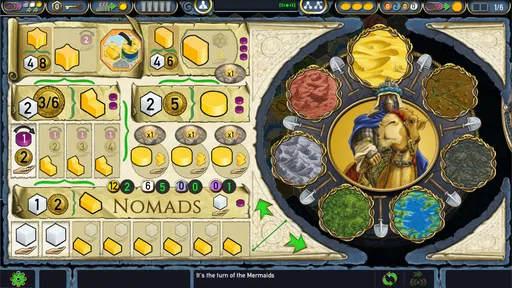
Unlocks and improvements matter because they alter the way I approach the next turn. They are not merely decorative rewards at the end of a round. A new capability can change which spaces are attractive, how aggressively I expand, or whether I can afford to pursue a secondary objective. The best moments come when an earlier investment suddenly makes a difficult move practical.
That flexibility also creates a trade-off. Improving one area can delay another, and I cannot usually pursue every promising direction at once. I have to decide whether to strengthen my current position or spend resources to open a different line of play. This prevents progression from becoming a simple ladder where every upgrade is automatically correct.
The game’s progress signals are therefore strongest for players who enjoy interpreting systems. I do not play merely to fill a bar. I watch the board, compare my position with the other factions, and judge whether my current plan still makes sense. That creates a more thoughtful form of momentum, although it requires more concentration than many mobile board games.
How to avoid confusing activity with progress
A common trap is making several legal moves without improving the overall position. I have had turns where I expanded simply because I could, only to discover that the new location created no useful follow-up. The better approach is to identify a short-term target and connect each action to it. If I cannot explain what a move is preparing, I pause before taking it.
Another useful insight is to treat flexibility as a resource. A position that leaves two or three strong routes open can be more valuable than one that gives a slightly larger immediate reward. This is especially important when playing against people who understand the board, because they can punish predictable plans by occupying key spaces or forcing me to spend resources inefficiently.
I also pay attention to the timing of improvements. Taking an upgrade too early can leave me unable to respond to the board, while waiting too long can make its benefit arrive after the important opportunity has passed. The right moment depends on the current layout and on what the other players appear to be preparing, so there is no universal sequence I would recommend.
The difficulty curve rewards preparation, not speed
Terra Mystica becomes difficult in layers. At first, I am learning the action structure and trying to understand what my faction needs. Then I begin noticing the competition for space, the cost of inefficient decisions, and the importance of timing. Later, the challenge comes from coordinating several objectives while reacting to opponents who may be pursuing very different plans.
This curve feels fair when I accept that the first attempts are educational. I should not expect to understand the strongest openings immediately. The game gives me enough information to make decisions, but it does not remove the need to interpret that information. That is a good fit for a strategy board game, though it can be daunting for anyone looking for a gentle introduction to the genre.
The difficulty is not based only on complicated rules. It comes from competing priorities. I may know what I want, yet lack the resources, space, or timing to achieve it cleanly. Choosing which goal to delay is often harder than choosing which goal to pursue. That is where the game starts to feel genuinely strategic rather than merely busy.
Playing against other people raises the pressure because their plans reshape the value of my options. A space that seemed safe can become urgent when another player approaches it. A resource I expected to use later may need to be spent defensively. This interaction makes multiplayer more unpredictable and more rewarding, but it also means that a carefully prepared plan can be disrupted without the game being unfair.
Who will enjoy the challenge
I would recommend this to players who already like serious board games, especially those who enjoy examining a faction’s strengths and building a plan around them. It is also a good choice for a group of friends willing to discuss decisions and replay after learning from one another. The ability to play with up to five people makes it suitable for a full strategy-game gathering rather than only solo-style sessions.
I would be more cautious recommending it to someone who wants a fast, relaxing mobile game. The price is $9.99, and that is easier to justify if I know I will return for thoughtful sessions rather than occasional five-minute play. The age rating is Everyone, but that does not mean the experience is simple. The content is broadly accessible; the strategy is not necessarily beginner-friendly.
It is also not the best match for players who dislike losing because of an early decision. The game’s long-term structure means that mistakes can have consequences well beyond the turn where they happen. I appreciate that honesty, but I know some friends would prefer a more forgiving board game with lighter planning and more room for recovery.
Pacing, replay pressure, and the reason to return
The pacing is deliberate. A session builds through a series of connected decisions rather than a constant stream of dramatic events. I usually feel the pressure increase as the board becomes more constrained and my remaining opportunities become clearer. The final stages are often about converting earlier preparation into a coherent result, not discovering an entirely new strategy at the last moment.
That structure creates strong retention for the right audience. After a loss, I can usually identify at least one decision I want to handle differently next time. Perhaps I expanded without protecting a route, spent resources too freely, or failed to notice that another player was competing for the same objective. The desire to test a corrected plan is more compelling than a simple reward loop.
Replay value also comes from learning how different factions shape the same map. A strategy that feels natural in one game may be unsuitable in another because the faction changes what I value. This keeps the experience from becoming a single memorized route. I still need to read the board and adapt, even when I recognize the general structure of a match.
There is a retention cost, however. Because the game asks for sustained attention, I do not always want to start another session immediately. It is the kind of title I return to when I have enough mental space, not something I automatically open whenever I have a spare minute. Players who measure replay value by rapid, effortless rounds may see that as a weakness.
In everyday use, I find it works best on a quiet evening with the device placed where I can focus. I would not choose it while commuting in a crowded environment or while multitasking through messages. A friend who enjoys tabletop nights could use it as a convenient alternative when the physical game is unavailable, but someone seeking a quick break would probably be happier with a lighter board game.
What the digital format changes
The mobile version removes much of the physical setup burden. I do not need to sort components across a table or keep track of every piece manually. That makes it easier to begin a game and easier to revisit a strategy I am still learning. The convenience is real, particularly for players who already know the tabletop style and want a more portable way to play.
At the same time, the screen cannot fully replace the social clarity of sitting around a board. When several people are discussing a position together, a physical layout can be easier to scan and point at. On a phone, the board may require more careful inspection, and the strategic picture can feel less immediate than it does with all pieces visible in front of me.
The game has a current version of 110 and requires Android 5.1 or later, which places it within reach of many older Android devices. Its install base is over ten thousand, while its average rating is 3.8 from around one thousand two hundred ratings. I read those figures as a sign of a specialized game with a reasonably established audience, not as proof that every player will enjoy its demanding pace.
There are also in-app purchases priced at $6.49 per item. That is worth considering alongside the initial purchase, especially if I prefer a completely predictable one-time cost. I would make the buying decision based on how deeply I expect to engage with the game rather than assuming the entry price alone tells the whole story.
My verdict on the progression and long-term appeal
After spending time with Terra Mystica, I see its progression as a conversation between goals, unlocks, and constraints. Early goals teach me to establish a viable position. Progress signals appear through better options and a more capable economy. The difficulty rises as the board tightens and opponents interfere. Retention comes from understanding why a plan succeeded or failed, then trying again with a sharper approach.
The central trade-off is depth versus immediacy. I get a rewarding strategic puzzle, but I have to invest attention before the game starts feeling comfortable. The unlocks are valuable because they support a larger plan, not because they arrive as isolated prizes. The pacing is satisfying when I want a serious board game and inconvenient when I want instant entertainment.
I would choose this over a casual dice-driven board game when I want decisions to matter across the whole session. I would choose a lighter alternative when playing with friends who are new to strategy games, when time is limited, or when the group prefers conversation over concentrated analysis. That distinction is important: this is not trying to be everyone’s board game, and it is better judged on its own demanding terms.
For a committed strategy player, the purchase can make sense because the digital format gives a complex tabletop experience a more convenient home. For a casual player, the cost, learning curve, additional item pricing, and deliberate pacing may outweigh the appeal. I recommend it most strongly to someone who enjoys studying a position, accepting imperfect choices, and returning after a loss with a better plan.
My final impression is positive but selective. DIGIDICED has brought a serious board-game experience to mobile without turning it into a shallow checklist of rewards. I like that progress is earned through decisions and that the game keeps asking me to balance immediate gains against future flexibility. If that sounds enjoyable, this can become a deep and replayable strategy companion. If it sounds exhausting, the same qualities will probably make it feel more like work than play.
Pros
- Deep strategy with many viable paths to victory
- Asymmetric factions make every playthrough feel distinct
- Excellent long-term replay value and strategic discovery
- Resource management and terraforming feel tightly connected
- Strong adaptation of the acclaimed board game’s core mechanics
Cons
- Steep learning curve can overwhelm newcomers
- Matches may take a long time to complete
- Limited interaction can make turns feel solitary
- Small interface elements may be difficult on phones
- Mistakes early in a match can be difficult to recover from
FAQs for Terra Mystica
What is Terra Mystica, and what kind of game is it?
Terra Mystica is a deep strategy board game adaptation focused on territory development, resource management, and faction planning. Players lead one of several unique fantasy peoples, reshape the landscape to suit their settlements, build structures, and compete for influence across the map. It is not a fast casual game; expect thoughtful turns, long-term planning, and a relatively complex ruleset designed for strategy fans.
Can I play Terra Mystica offline or without creating an account?
The digital version is primarily designed for strategic matches against computer opponents or other players, and available modes can depend on the platform and current version. Some editions may support offline play against AI, while online features generally require an internet connection and may involve account or platform services. Before downloading, check the store description to confirm the exact offline, multiplayer, and login requirements for your device.
Is Terra Mystica suitable for beginners?
Terra Mystica can be challenging for beginners because every faction has different abilities, terrain preferences, and economic strengths. The tutorial and introductory guidance can help explain the basic systems, but learning efficient strategies usually takes several matches. New players should begin with a recommended faction, study the turn structure carefully, and avoid expecting immediate success against experienced human opponents or higher-level AI.
Does Terra Mystica include multiplayer, and how does it work?
Multiplayer is one of Terra Mystica’s main attractions, allowing players to compete through strategic matches rather than quick real-time action. Depending on the edition, you may find online games, invitations, matchmaking, or turn-based play options. Match availability and specific multiplayer tools can vary between Android, iOS, and other platforms, so review the current listing for information about cross-platform support, private rooms, and asynchronous games.
Does Terra Mystica contain in-app purchases or require payment?
The cost and monetization model for Terra Mystica may differ according to the platform, region, and edition you download. Some versions are sold as premium games, while additional content or optional purchases may be offered separately. It is worth checking the official store page before installing, especially if you want a complete experience without recurring costs. Also review privacy permissions and any account-related requirements before confirming the download.


